

 Image 1 of 3
 Image 2 of 3
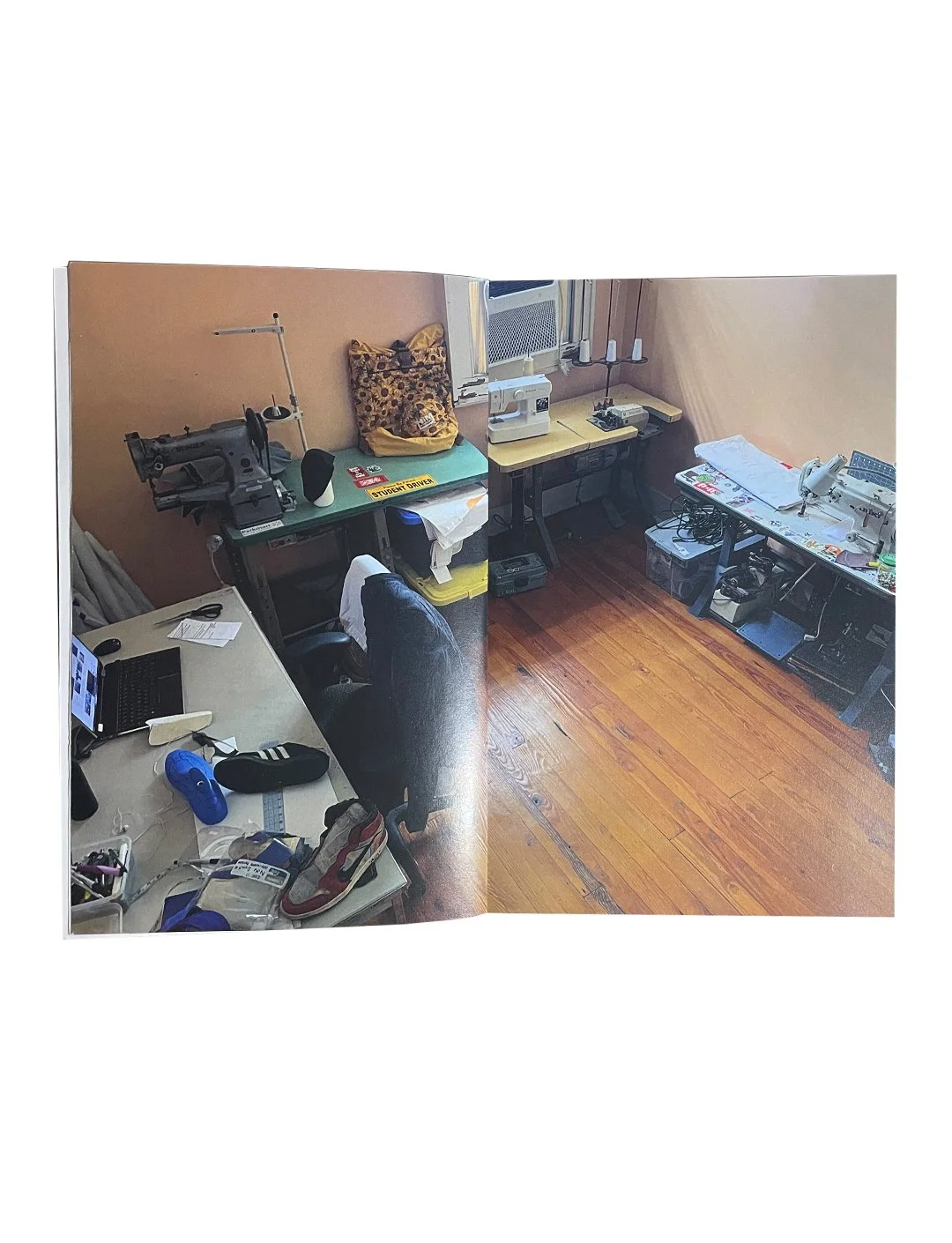 Image 3 of 3
“Problem of State” confronts the overconsumption built into the everyday objects people barely think about. The clothes they cycle through, the home goods they replace without hesitation, the recreational products treated as disposable entertainment. It challenges the comfort of excess by refusing speed, refusing convenience, and refusing the illusion that things appear without cost. The process is slowed down on purpose. The act of making is not hidden. It is exposed, deliberate, and impossible to ignore.
Each piece is constructed to honor the labor behind it. Not as a concept or a marketing line, but as a physical record of time, effort, and material. The textiles carry their past. The marks of the hands that cut, stitched, and assembled them remain visible. Nothing is smoothed over to imitate perfection. Nothing is produced just to fill space.
This collection pushes back against disposability and the culture that encourages it. It stands against the idea that objects should be cheap, fast, and forgettable. Every garment and object is meant to last, to move through daily life, and to carry the weight of the choices that created it. “Problem of State” is not about excess. It is about accountability, restraint, and the value of making something that deserves to stay.
“Problem of State” confronts the overconsumption built into the everyday objects people barely think about. The clothes they cycle through, the home goods they replace without hesitation, the recreational products treated as disposable entertainment. It challenges the comfort of excess by refusing speed, refusing convenience, and refusing the illusion that things appear without cost. The process is slowed down on purpose. The act of making is not hidden. It is exposed, deliberate, and impossible to ignore.
Each piece is constructed to honor the labor behind it. Not as a concept or a marketing line, but as a physical record of time, effort, and material. The textiles carry their past. The marks of the hands that cut, stitched, and assembled them remain visible. Nothing is smoothed over to imitate perfection. Nothing is produced just to fill space.
This collection pushes back against disposability and the culture that encourages it. It stands against the idea that objects should be cheap, fast, and forgettable. Every garment and object is meant to last, to move through daily life, and to carry the weight of the choices that created it. “Problem of State” is not about excess. It is about accountability, restraint, and the value of making something that deserves to stay.